






In The Spotlight
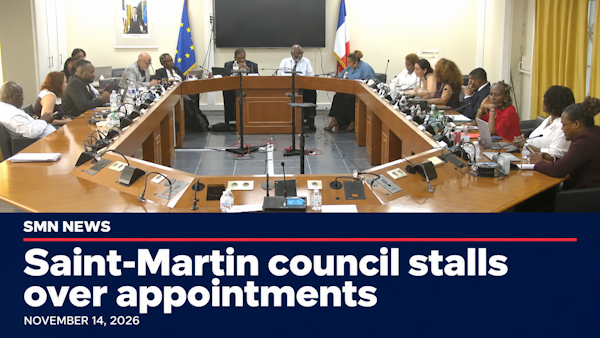
Saturday’s roll call recorded 16 councilors present and seven excused, with several absentees represented by proxy. Mussington acknowledged arriving an hour late and repeated his apology after councilors raised the delay during the debate.
The two sides differed over what Friday’s vote allowed the council to do next. Councilors seeking the appointments cited Article LO 6321-25 of France’s General Code of Territorial Collectivities. It says the Territorial Council may form its committees and designate representatives to outside bodies after the Executive Council is elected. They argued that Friday’s changes gave the Territorial Council the authority to vote on those appointments on the spot.
Mussington said the changes arose from a replacement within the current term and argued that the council could only take up items on its agenda. He also said he preferred to wait for the administrative legality review of Friday’s resolution before formally treating the Executive Council’s composition as changed. He offered to form a joint committee to seek agreement on how to proceed and gave no date for a vote.
Councilors challenge the delay
Councilor Philippe Philidor rejected the offer of further talks, saying the council was asking Mussington to apply the organic law. Senator and Territorial Councilor Daniel Gibbs said the group pressing for a vote had 12 councilors present or represented by proxy. He also questioned whether Friday’s sitting had originally been adjourned and subsequently treated as a suspension, a distinction he said would affect the notice required to convene another meeting.
Councilor Raphaël Sanchez challenged the argument that the appointments were outside the agenda. He said the draft resolutions and supporting papers were sent on October 23 and presented at the October 29 Executive Council meeting, where he said Mussington and members of the executive declined to examine them.
Mussington acknowledged that six councilors could submit matters for consideration. He maintained that the president decides when they come before the assembly and said the proposals would be added to the agenda later. Councilors pressing for action argued that the Territorial Council should decide by majority vote whether to proceed.
Nicolas-Rembotte says councilors acted to gain access to records
Mélissa Nicolas-Rembotte apologized to residents watching the exchanges and to Collectivité staff called in on a Saturday. She said Friday’s reshuffle stemmed from years of requests for information. Councilors had sought Executive Council agendas and asked for a review of delegations they considered unlawful, she said, adding that they had never received the agendas. She said the new majority gave them a chance to exercise their right to information.
Nicolas-Rembotte said the appointments themselves could take place later if the assembly decided to defer them. She argued that Mussington should first ask councilors to vote on whether to proceed with reconstituting the boards. She also objected to his description of Friday’s proceedings as a “charade,” pointing to five suspensions on Friday and the hour councilors waited Saturday.
Philidor recounts how four proposals reached the floor
Philidor said councilors first requested that four draft resolutions be placed on the agenda under the organic law. When that failed, he said, they invoked Article 14 of the council’s internal rules and submitted a motion containing the four proposals. He said Mussington declined to put the motion to a vote.
According to Philidor, the agenda item to fill one Executive Council vacancy gave the assembly a route to elect all six members who serve alongside Mussington. The new majority used that vote to choose three new vice presidents, he said. He then asked Mussington directly whether he would put a resolution on committee and board appointments to a vote.
Mussington defended his handling of the agenda and said councilors were presenting substantive resolutions through a motion. He cited a Saint-Barthélemy case that he said upheld the territorial president’s decision to leave a vacancy off the agenda. He said he had chosen to list the Saint-Martin vacancy and argued that any resolution debated and adopted outside the agenda could be struck down if challenged in administrative court. Councilors countered that the appointments flowed from the Executive Council vote already taken and again asked him to let the assembly decide.
Mussington proposes Monday talks before council pauses again
Mussington said he was willing to meet councilors Monday morning, November 16, to agree on when the proposals could go before the Executive Council and then the Territorial Council. He said the law set no deadline for naming committee members or representatives to outside bodies. Councilors pressing for a decision said the word “may” in the statute gave the assembly the choice, and that a vote could settle whether it wanted to proceed.
Councilor Michel Petit backed Mussington’s position on the agenda. He recalled that the appointments at the start of the current term went ahead under an agenda signed by then-President Daniel Gibbs that expressly listed them. Petit argued that a resolution adopted outside the agenda could be annulled if challenged.
Members of the new majority then requested a suspension to discuss how to proceed with the sitting and what to do next about the Collectivité’s governance. Mussington granted the recess and told them to take the time they needed. He set no time for the sitting to resume.
Tourism Office representation at stake
The standoff follows a split that left Mussington’s camp with 11 seats in the 23-member Territorial Council. On Friday, the 12 councilors on the other side opposed his proposed agenda changes. The Saturday dispute tested whether that majority could move from defeating the president’s proposals to voting on its own appointments.
One proposal seeks to renew the Collectivité’s representation at the Saint-Martin Tourism Office, putting its presidency under Valérie Damaseau in the spotlight while the Festival de la Gastronomie is underway in Marigot.
Saint-Martin’s Territorial Council will resume its sitting on Monday, Nov. 16, after failing to reach a quorum when members returned from Saturday’s recess. The lack of a quorum prevented the council from continuing, leaving the proposed appointments to committees and outside bodies, including the Tourism Office, unresolved.

HARBOUR VIEW, PHILIPSBURG:--- On Friday, November 13, 2026, His Excellency Governor Ajamu G. Baly administered the oath to Mrs. Johanna E.W.M. Verschueren-Sommers, a new member of the Council of Advice. The Council of Advice recommended appointing Mrs. Verschueren-Sommers because of her educational and community-oriented profile. National Decree of October 6, 2026, appointed Mrs. Verschueren-Sommers. The swearing-in ratifies the appointment. Mrs. Verschueren-Sommers has more than 40 years of experience in education, community development, and project management. She is committed to educational innovation and community impact. Governor Baly congratulated the new member in her role as legislative advisor and emphasized her added value at the Council of Advice.
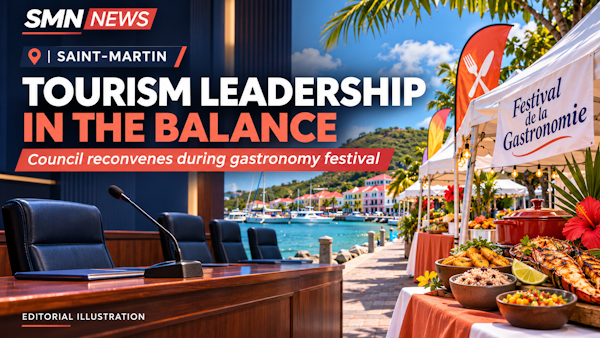
MARIGOT, Saint-Martin: --- Saint-Martin’s Territorial Council will reconvene at 11 a.m. Saturday, with opposition and independent councilors pressing to replace Valérie Damaseau as president of the Tourism Office. The push comes as the sixth Festival de la Gastronomie, a signature initiative of her tenure, holds its second day of events on the Marigot waterfront.
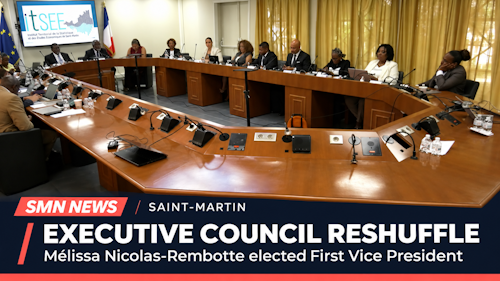
Friday’s session was suspended after councilors elected six members of the Executive Council serving alongside President Louis Mussington. In an interview with Le Pélican, Senator Daniel Gibbs said Mussington asked to resume Saturday after feeling unwell. Gibbs said his group would return to committee and external appointments, arguing that the executive reshuffle gave the council grounds to revisit who represents the Collectivité.
The Tourism Office presidency is one of four issues opposition and independent councilors had sought to put on Friday’s agenda. The others concern the Collectivité’s representation at SEMSAMAR, powers delegated to the Executive Council and the Beauperthuy land matter. Gibbs said the proposals had been submitted in advance and that a request to add them during Friday’s meeting was refused. No vote removing Damaseau had been confirmed ahead of Saturday’s session.
From Gibbs’s first vice president to Senate rival
Damaseau became First Vice President of the Collectivité when Team Gibbs took office in 2017. She later broke with Gibbs and led her own Alternative slate in the 2022 territorial elections. After the first round, Alternative joined Louis Mussington’s list. This September, Damaseau faced her former political ally in the Senate election and lost to Gibbs 13–11 in the second round.
The Senate race also exposed a split within Damaseau’s former slate. Bernadette Venthou-Dumaine, who ran with Alternative in 2022, entered the Senate race herself and announced her departure from Mussington’s RSMA group. She is now among the councilors outside that group. That history makes the effort to remove Damaseau look like political payback. Whether a private dispute over Senate backing influenced the push to replace her remains unverified.
A signature tourism project is underway
Damaseau has helped shape tourism promotion on the French side for much of the past decade. The Festival de la Gastronomie, launched in 2021 during her tenure, has grown into a 12-day program that puts local chefs, restaurants and Saint-Martin’s culinary traditions in front of residents and visitors. This year’s festival runs through November 22. Saturday’s program includes the Gastronomy Village and a cooking workshop on the Marigot waterfront.
The proposed change concerns Damaseau’s role as president of the Tourism Office. Aïda Weinum directs the office and opened this year’s festivities in Grand Case. With the festival underway, councilors seeking to replace Damaseau face a question that goes beyond who has the votes. What would a leadership change deliver for Saint-Martin’s tourism sector, and why should it happen now?

U.S. departures resumed Friday night after an air traffic control communications failure. Airlines faced thousands of cancellations heading into the weekend.
PHILADELPHIA: The Federal Aviation Administration lifted its nationwide ground stop Friday night, November 13, but disruptions carried into Saturday. By early Saturday morning, flight-tracking service FlightAware listed more than 3,200 cancellations for flights within, into or out of the United States.
U.S. Transportation Secretary Sean Duffy said the FAA lifted the order at 8:15 p.m. Eastern time Friday, or 9:15 p.m. in Sint Maarten. He warned that departures would resume gradually as airlines worked to position aircraft and crews. Reuters reported that nearly 10,000 flights had been canceled by 11:30 p.m. Friday, citing Flightradar24.
Communications failure prompted the nationwide stop
The FAA issued the order Friday afternoon after communications problems affected multiple regional air traffic control centers. Duffy said officials detected inconsistencies in radar data and communications with aircraft while more than 3,500 planes were in the air. He said older communications equipment had overloaded, and officials were still investigating what triggered the failure.
Homeland Security Secretary Markwayne Mullin said investigators had found no evidence of a cyberattack as of Friday evening. Federal officials said they found no connection between the FAA failure and the separately reported Microsoft outage.
What the disruption means for Sint Maarten travelers
Saturday’s cancellation count covers the United States and international flights to and from the country. A breakdown of cancellations at Princess Juliana International Airport was unavailable at the time of publication. Travelers flying between Sint Maarten and the United States can check their flight status directly with their airline before leaving for the airport.

More News



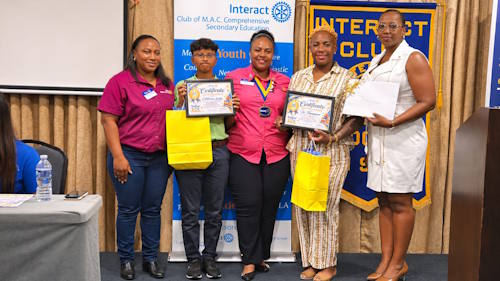


Une île, deux territoires, mais des enjeux économiques largement partagés. Le jeudi 5 novembre 2026, la Chambre Consulaire Interprofessionnelle de Saint-Martin (CCISM) et la Sint Maarten Chamber of Commerce and Industry (COCI) ont franchi une nouvelle étape
dans leurs relations en signant, à Sint Maarten, un protocole d'accord (Memorandum of Understanding) destiné à structurer et renforcer leur coopération pour les trois prochaines années.
Signé par les présidentes des deux institutions, Angèle Dormoy pour la CCISM et Tamara Leonard pour la COCI, cet accord marque une avancée importante dans le rapprochement des deux chambres consulaires. Il s'agit du premier accord formel de cette nature entre la CCISM
et son homologue de la partie néerlandaise.
Une coopération à l'image des réalités économiques de l'île Si Saint-Martin et Sint Maarten évoluent dans deux environnements administratifs, juridiques et réglementaires distincts, leurs économies demeurent néanmoins étroitement liées. Chaque jour, entrepreneurs, salariés, clients et fournisseurs franchissent la frontière pour travailler, commercer et développer leurs activités.
Cette interdépendance constitue une richesse, mais elle appelle également une meilleure coordination des acteurs économiques et institutionnels.
À travers cet accord, les deux chambres souhaitent dépasser le cadre des échanges ponctuels pour instaurer une collaboration régulière, structurée et tournée vers des résultats concrets au bénéfice des entreprises des deux territoires.
Des engagements concrets au service des entreprises Le protocole définit plusieurs axes prioritaires de coopération :
• Le développement des échanges économiques, à travers l'organisation conjointe de rencontres professionnelles, de forums, de salons et d'événements favorisant les relations d'affaires entre les deux territoires.
• L'accompagnement de l'entrepreneuriat et des PME, notamment par le partage d'expertises, la formation, le développement des compétences et la mise en réseau des entreprises.
• Le partage d'informations et de données économiques, afin de mieux comprendre les
dynamiques du territoire et d'éclairer les décisions des acteurs économiques.
• La promotion de l'attractivité de l'île, en valorisant les complémentarités des deux territoires auprès des investisseurs et partenaires régionaux et internationaux.
• Le développement de projets communs, notamment par l'identification d'opportunités de financement européennes, caribéennes et internationales.
Les deux institutions entendent également renforcer leur dialogue sur les enjeux qu'elles partagent : la compétitivité des entreprises, la diversification économique, l'accès aux compétences, l'innovation et la résilience du tissu entrepreneurial.
Transformer une volonté commune en actions. Conclu pour une durée de trois ans, ce partenariat prévoit une coordination régulière entre les
deux chambres, la désignation d'interlocuteurs dédiés et des rencontres institutionnelles au moins annuelles pour évaluer les avancées et définir les prochaines priorités.
Les initiatives seront progressivement déclinées en plans d'action et projets communs, en fonction des opportunités et des besoins identifiés.
Pour Angèle Dormoy, présidente de la CCISM :
« Nos entrepreneurs travaillent déjà ensemble, échangent et développent des activités de part et d'autre de la frontière. Il appartient à nos institutions de faire en sorte que leur coopération reflète cette réalité et les accompagne dans leur développement. Notre ambition n'est pas simplement de formaliser une bonne relation entre deux chambres, mais de la traduire en actions concrètes et en nouvelles opportunités pour nos entreprises. »
Une ambition partagée pour le rayonnement économique de Saint-Martin / Sint Maarten Au-delà des actions de proximité, cette coopération ouvre également des perspectives à l'échelle régionale et internationale. En mobilisant leurs réseaux respectifs, les deux chambres pourront explorer de nouvelles collaborations, faciliter l'accès à des marchés et renforcer la visibilité de l'île dans les espaces économiques caribéens, européens et internationaux.
Avec cette signature, la CCISM et la COCI affirment une conviction commune : les différences institutionnelles entre les deux territoires ne doivent pas constituer un frein à leur développement, mais une occasion de conjuguer leurs forces au service d'une économie insulaire plus dynamique, compétitive et résiliente.
La Collectivité de Saint-Martin informe les habitants de Quartier d’Orléans du démarrage des travaux de renouvellement des réseaux d’éclairage public, à compter du 26 octobre 2026, pour une durée prévisionnelle de 2 mois.
Dans la cadre du renouvellement des réseaux Eclairage public, la Collectivité procède au renouvellement des réseaux de l’éclairage public à Quartier d’Orléans. Ces travaux de terrassement, déroulage, pose des mats, lanternes et raccordement, se déroulent de 07h00 à 17h00 comme suit :
- Du lundi 26 octobre 2026 au mardi 22 décembre 2026
- Rue des Ground Doves
- Du lundi 07 au mercredi 23 décembre 2026
- Rue Round The Pound
Afin de procéder aux travaux de réalisation de massif béton, pose des mâts solaires dans le cadre du renouvellement des réseaux d’éclairage public, les travaux se poursuivent également dans le lotissement de Spring de Quartier d’Orléans:
- Du lundi 07 au mercredi 23 décembre 2026
- Rue des Sparrows ;
- Rue des Trush ;
- Rue des Pigeons ;
- Rue Lil Dan Beauperthuy ;
- Impasse Yellow Beast.
L’entreprise EIFFAGE ENERGIE SYSTEMES (Sous-Traitée par l’entreprise DORTEL CARAIBES) est chargée de la réalisation des travaux prévus du 26 octobre au 23 décembre. Le montant des travaux s’élève à 929 420,54 €
Les automobilistes et les résidents du secteur sont invités à respecter les dispositions en vigueur et la signalisation routière.
La Collectivité de Saint-Martin s’excuse auprès des riverains et des automobilistes, de la gêne occasionnée par ces travaux d’utilité publique et les remercie pour leur compréhension.
La Collectivité de Saint-Martin informe les usagers, de la fermeture temporaire de la Délégation Attractivité, Économie et Emploi à compter du lundi 19 octobre 2026.
En raison de travaux dans ses locaux de Concordia, la Délégation Attractivité, Économie et Emploi (DA2E) de la Collectivité de Saint-Martin informe les usagers que son accueil physique est temporairement fermé, à compter du lundi 19 octobre 2026, et ce jusqu’à nouvel ordre.
Les services de la délégation restent joignables aux contacts habituels :
- Par mail :
This email address is being protected from spambots. You need JavaScript enabled to view it.
- Par téléphone : 0690 66 10 96
La Collectivité remercie les usagers de leur compréhension.

Dear Editor,
I am writing on behalf of the United St. Lucian Community Association to bring to the attention of the general public a matter of serious concern involving the Sint Maarten Red Cross, particularly its handling of our request for first responder services for our Annual Creole Day event.
On September 1, 2026, our Association formally submitted a written request to the Sint Maarten Red Cross for two first responders for our event, scheduled for October 31, 2026.
Unfortunately, as of September 25, 2026, when we formally raised our concerns with the organization, we had received no official response to our request.
This was particularly troubling because one requirement for obtaining an event permit from the Ministry of Justice was written confirmation from the relevant first responder agency indicating its willingness to provide coverage at the event.
We believe that organizations serving the public have a responsibility to communicate professionally, respond within a reasonable timeframe, and demonstrate accountability, particularly when their services are essential to community activities.
What made this situation even more concerning was how a Red Cross volunteer, Mr. Bradly Attly, subsequently handled communication.
Rather than addressing our formal correspondence through the Association's established communication channel, Mr. Attly contacted me personally by telephone seeking additional information. Despite my request that he direct further communication through the official channel, he subsequently contacted other members of our Board and attempted to arrange meetings with them.
As President, I believe it is important to maintain proper lines of communication and respect an organization's authority and structure. When a community association submits an official request, it is reasonable to expect a response directed to the Association through its established leadership.
I am also deeply concerned about previous statements attributed to Mr. Attly during earlier interactions. On those occasions, he stated that he had the authority to issue or reject event permits and could stop our event because we did not use the services of the Red Cross.
Such statements raise legitimate questions about the extent of authority vested in individual volunteers and the boundaries between an organization's responsibilities and the authority of government agencies.
No individual, regardless of their position or organizational affiliation, should create the impression that they possess powers that properly belong to government authorities. Equally, no community organization should feel intimidated, pressured, or disadvantaged for exercising its right to make independent decisions concerning its activities.
This matter is bigger than one event or one community association.
Community organizations throughout Sint Maarten dedicate considerable time, effort, and resources to organizing cultural, social, and charitable activities that contribute to the development and preservation of our communities. These organizations deserve courtesy, fairness, and professionalism from every institution with which they interact.
The Red Cross plays an important role in public safety and emergency response. We recognize and respect the importance of its work. However, the importance of an organization's mandate should never place it above the principles of transparency, accountability, and professional conduct.
We are not asking for special treatment. We are asking for respect, clear communication, and accountability.
We believe the leadership of the Sint Maarten Red Cross should address the following concerns:
- Why was our formal request of September 1, 2026, not formally acknowledged and addressed within a reasonable timeframe?
- What are the official procedures and requirements for community organizations seeking first responder services for public events?
- What authority, if any, do individual Red Cross volunteers have regarding event permits or preventing events from taking place?
- What measures are in place to ensure that volunteers communicate appropriately and professionally with the organizations requesting their services?
We believe these are reasonable questions that deserve clear answers, not only for our Association but also for other community organizations that may encounter similar circumstances.
As President of the United St. Lucian Community Association, I remain committed to protecting our organization's interests, dignity, and independence, as well as the communities we serve.
Community organizations should be partners in Sint Maarten's development, not entities made to feel intimidated or powerless when seeking essential services.
I hope that by bringing this matter into the public domain, we can encourage greater transparency, mutual respect, and accountability in the way institutions interact with community organizations.
Respect must be mutual, accountability must be expected, and no organization should feel that its ability to serve the community depends on submitting to the personal authority of an individual.
Yours respectfully,
Cliff C. James
President
The United St. Lucian Community Association
Dear Editor,
There remains a profound sense of grief, concern, unanswered questions, and lingering pain within the community of St. Peters and across St. Martin regarding the fatal shooting of Mr. Rudy Benjamin on February 13, 2026. Although time has passed since the incident, many residents still seek clarity and transparency about what happened that evening. The community believes that a full understanding of the facts is essential to fostering accountability and rebuilding public trust.
As the court proceedings approach on November 13, many residents continue to await information regarding key aspects of the investigation being handled by the Prosecutor's Office of Curaçao. To date, little public information has been shared about the time of the Court Case on November 13, the evidence collected (including camera footage), autopsy findings, and other details that may help clarify what transpired that night. Mr. Benjamin's family and the wider community are still seeking answers.
As a community leader, I believe law enforcement agencies and their representatives should strengthen their engagement with the communities they serve, particularly during times of tragedy. Empathy, open communication, and meaningful community outreach can play a vital role in rebuilding trust and confidence between residents and the Police Force.
As Co-Founder of the St. Peters Community Council, I remain concerned by the many differing accounts, questions regarding procedures, and unresolved issues that have emerged since the incident. The public deserves assurance that all established protocols, training standards, and operational procedures were followed appropriately and that any shortcomings, if identified, will be addressed transparently.
The Police Force invests considerable resources in professional development, including emergency response training, lifesaving techniques, crisis intervention, and community-oriented policing. Consequently, members of the public continue to ask important questions, including:
- Were all appropriate de-escalation measures exhausted before deadly force was used?
- What is the police procedure when an officer is going to the scene of an individual who is perceived to have a weapon?
- Were officers able to apply any of their life-saving or CPR training immediately following the shooting?
- Is it necessary to shoot a person more than allegedly 10 times when the person did not shoot back at the officers?
- Did the officers who shot Rudy Benjamin leave the crime scene, and were other officers brought in to take over the scene on their behalf? Is this part of standard police procedure?
- Did the Police call a physician to officially pronounce Mr. Benjamin's death on the night of February 13 before his body was removed to the funeral home?
- Can the authorities explain why Mr. Benjamin's death certificate allegedly indicates that a doctor pronounced him dead on February 14 at 11:50 a.m., rather than on the night of February 13 when the shooting occurred?
- Are the three officers involved in the incident still actively serving? If so, why were they not placed on administrative leave pending the outcome of the investigation?
- Did all investigative protocols follow established police procedures?
These questions are not intended to prejudge the outcome of the investigation or court proceedings. Rather, they reflect the legitimate concerns of a community seeking transparency, accountability, and a clear understanding of the facts. Many unanswered questions and conflicting accounts remain surrounding this incident. For this reason, many residents believe that presenting any available camera footage and other relevant evidence during the court proceedings will be essential to provide clarity, address speculation, and restore public confidence in the investigative process.
St. Peters residents viewed Rudy Benjamin as a well-known and respected member of the community. Many knew him as a hardworking individual who contributed positively to those around him and was often willing to help those in need. For that reason, many residents remain deeply shocked by the circumstances of his death and continue to struggle with the loss.
The family and the wider community hope that the court proceedings will provide a thorough, fair, and transparent examination of all relevant evidence, including any available video or audio recordings. Public confidence can only be strengthened when questions are answered openly and justice is administered impartially.
In addition, I encourage continued investment in tools and training that support accountability and de-escalation, including body-worn cameras, enhanced crisis intervention techniques, pepper spray, and other non-lethal response options. Such measures can strengthen community trust and help prevent similar tragedies in the future.
Ultimately, the people of St. Peters are seeking the truth. Transparency, accountability, and open communication are essential not only for the Benjamin family but also for restoring trust between law enforcement and the community it serves.
Maurice Lake
Co-Founder
St. Peters Community Council
Sint Maarten’s September 24 National Job Fair promised to connect employers and jobseekers through the National Employment Services Center. The fair and its digital vacancy portal offer a useful starting point. The harder question is how many participants move into stable work.
At the sixty-day mark, the organizers should publish aggregate results: job offers made, positions actually filled, workers still employed, and vacancies that remain open. Count results by broad occupational group without exposing anyone’s personal information.
The digital matching portal should also help identify applicants with relevant experience who need a specific skill. An employer could offer a short supervised work exercise in hospitality, utilities, or administration. Rather than relying on an automated keyword match, the employer would see how a person handles a real problem and asks for assistance.
Applicants deserve actionable feedback when a match fails. A message saying only that the application was unsuccessful teaches nothing. A clear explanation can direct the worker to a relevant training opportunity.
A job fair proves its value when it helps people get and keep jobs. The next report should show that pathway.
Gleb Tsipursky, PhD, a behavioral scientist, CEO of Disaster Avoidance Experts, and author of The Psychology of AI Adoption at Work: From Resistance to Results (Georgetown University Press, 2026) https://disasteravoidanceexperts.com/aibook
Saturday’s roll call recorded 16 councilors present and seven excused, with several absentees represented by proxy. Mussington acknowledged arriving an hour late and repeated his apology after councilors raised the delay during the debate.
The two sides differed over what Friday’s vote allowed the council to do next. Councilors seeking the appointments cited Article LO 6321-25 of France’s General Code of Territorial Collectivities. It says the Territorial Council may form its committees and designate representatives to outside bodies after the Executive Council is elected. They argued that Friday’s changes gave the Territorial Council the authority to vote on those appointments on the spot.
Mussington said the changes arose from a replacement within the current term and argued that the council could only take up items on its agenda. He also said he preferred to wait for the administrative legality review of Friday’s resolution before formally treating the Executive Council’s composition as changed. He offered to form a joint committee to seek agreement on how to proceed and gave no date for a vote.
Councilors challenge the delay
Councilor Philippe Philidor rejected the offer of further talks, saying the council was asking Mussington to apply the organic law. Senator and Territorial Councilor Daniel Gibbs said the group pressing for a vote had 12 councilors present or represented by proxy. He also questioned whether Friday’s sitting had originally been adjourned and subsequently treated as a suspension, a distinction he said would affect the notice required to convene another meeting.
Councilor Raphaël Sanchez challenged the argument that the appointments were outside the agenda. He said the draft resolutions and supporting papers were sent on October 23 and presented at the October 29 Executive Council meeting, where he said Mussington and members of the executive declined to examine them.
Mussington acknowledged that six councilors could submit matters for consideration. He maintained that the president decides when they come before the assembly and said the proposals would be added to the agenda later. Councilors pressing for action argued that the Territorial Council should decide by majority vote whether to proceed.
Nicolas-Rembotte says councilors acted to gain access to records
Mélissa Nicolas-Rembotte apologized to residents watching the exchanges and to Collectivité staff called in on a Saturday. She said Friday’s reshuffle stemmed from years of requests for information. Councilors had sought Executive Council agendas and asked for a review of delegations they considered unlawful, she said, adding that they had never received the agendas. She said the new majority gave them a chance to exercise their right to information.
Nicolas-Rembotte said the appointments themselves could take place later if the assembly decided to defer them. She argued that Mussington should first ask councilors to vote on whether to proceed with reconstituting the boards. She also objected to his description of Friday’s proceedings as a “charade,” pointing to five suspensions on Friday and the hour councilors waited Saturday.
Philidor recounts how four proposals reached the floor
Philidor said councilors first requested that four draft resolutions be placed on the agenda under the organic law. When that failed, he said, they invoked Article 14 of the council’s internal rules and submitted a motion containing the four proposals. He said Mussington declined to put the motion to a vote.
According to Philidor, the agenda item to fill one Executive Council vacancy gave the assembly a route to elect all six members who serve alongside Mussington. The new majority used that vote to choose three new vice presidents, he said. He then asked Mussington directly whether he would put a resolution on committee and board appointments to a vote.
Mussington defended his handling of the agenda and said councilors were presenting substantive resolutions through a motion. He cited a Saint-Barthélemy case that he said upheld the territorial president’s decision to leave a vacancy off the agenda. He said he had chosen to list the Saint-Martin vacancy and argued that any resolution debated and adopted outside the agenda could be struck down if challenged in administrative court. Councilors countered that the appointments flowed from the Executive Council vote already taken and again asked him to let the assembly decide.
Mussington proposes Monday talks before council pauses again
Mussington said he was willing to meet councilors Monday morning, November 16, to agree on when the proposals could go before the Executive Council and then the Territorial Council. He said the law set no deadline for naming committee members or representatives to outside bodies. Councilors pressing for a decision said the word “may” in the statute gave the assembly the choice, and that a vote could settle whether it wanted to proceed.
Councilor Michel Petit backed Mussington’s position on the agenda. He recalled that the appointments at the start of the current term went ahead under an agenda signed by then-President Daniel Gibbs that expressly listed them. Petit argued that a resolution adopted outside the agenda could be annulled if challenged.
Members of the new majority then requested a suspension to discuss how to proceed with the sitting and what to do next about the Collectivité’s governance. Mussington granted the recess and told them to take the time they needed. He set no time for the sitting to resume.
Tourism Office representation at stake
The standoff follows a split that left Mussington’s camp with 11 seats in the 23-member Territorial Council. On Friday, the 12 councilors on the other side opposed his proposed agenda changes. The Saturday dispute tested whether that majority could move from defeating the president’s proposals to voting on its own appointments.
One proposal seeks to renew the Collectivité’s representation at the Saint-Martin Tourism Office, putting its presidency under Valérie Damaseau in the spotlight while the Festival de la Gastronomie is underway in Marigot.
Saint-Martin’s Territorial Council will resume its sitting on Monday, Nov. 16, after failing to reach a quorum when members returned from Saturday’s recess. The lack of a quorum prevented the council from continuing, leaving the proposed appointments to committees and outside bodies, including the Tourism Office, unresolved.
HARBOUR VIEW, PHILIPSBURG:--- On Friday, November 13, 2026, His Excellency Governor Ajamu G. Baly administered the oath to Mrs. Johanna E.W.M. Verschueren-Sommers, a new member of the Council of Advice. The Council of Advice recommended appointing Mrs. Verschueren-Sommers because of her educational and community-oriented profile. National Decree of October 6, 2026, appointed Mrs. Verschueren-Sommers. The swearing-in ratifies the appointment. Mrs. Verschueren-Sommers has more than 40 years of experience in education, community development, and project management. She is committed to educational innovation and community impact. Governor Baly congratulated the new member in her role as legislative advisor and emphasized her added value at the Council of Advice.
MARIGOT, Saint-Martin: --- Saint-Martin’s Territorial Council will reconvene at 11 a.m. Saturday, with opposition and independent councilors pressing to replace Valérie Damaseau as president of the Tourism Office. The push comes as the sixth Festival de la Gastronomie, a signature initiative of her tenure, holds its second day of events on the Marigot waterfront.
Friday’s session was suspended after councilors elected six members of the Executive Council serving alongside President Louis Mussington. In an interview with Le Pélican, Senator Daniel Gibbs said Mussington asked to resume Saturday after feeling unwell. Gibbs said his group would return to committee and external appointments, arguing that the executive reshuffle gave the council grounds to revisit who represents the Collectivité.
The Tourism Office presidency is one of four issues opposition and independent councilors had sought to put on Friday’s agenda. The others concern the Collectivité’s representation at SEMSAMAR, powers delegated to the Executive Council and the Beauperthuy land matter. Gibbs said the proposals had been submitted in advance and that a request to add them during Friday’s meeting was refused. No vote removing Damaseau had been confirmed ahead of Saturday’s session.
From Gibbs’s first vice president to Senate rival
Damaseau became First Vice President of the Collectivité when Team Gibbs took office in 2017. She later broke with Gibbs and led her own Alternative slate in the 2022 territorial elections. After the first round, Alternative joined Louis Mussington’s list. This September, Damaseau faced her former political ally in the Senate election and lost to Gibbs 13–11 in the second round.
The Senate race also exposed a split within Damaseau’s former slate. Bernadette Venthou-Dumaine, who ran with Alternative in 2022, entered the Senate race herself and announced her departure from Mussington’s RSMA group. She is now among the councilors outside that group. That history makes the effort to remove Damaseau look like political payback. Whether a private dispute over Senate backing influenced the push to replace her remains unverified.
A signature tourism project is underway
Damaseau has helped shape tourism promotion on the French side for much of the past decade. The Festival de la Gastronomie, launched in 2021 during her tenure, has grown into a 12-day program that puts local chefs, restaurants and Saint-Martin’s culinary traditions in front of residents and visitors. This year’s festival runs through November 22. Saturday’s program includes the Gastronomy Village and a cooking workshop on the Marigot waterfront.
The proposed change concerns Damaseau’s role as president of the Tourism Office. Aïda Weinum directs the office and opened this year’s festivities in Grand Case. With the festival underway, councilors seeking to replace Damaseau face a question that goes beyond who has the votes. What would a leadership change deliver for Saint-Martin’s tourism sector, and why should it happen now?


